
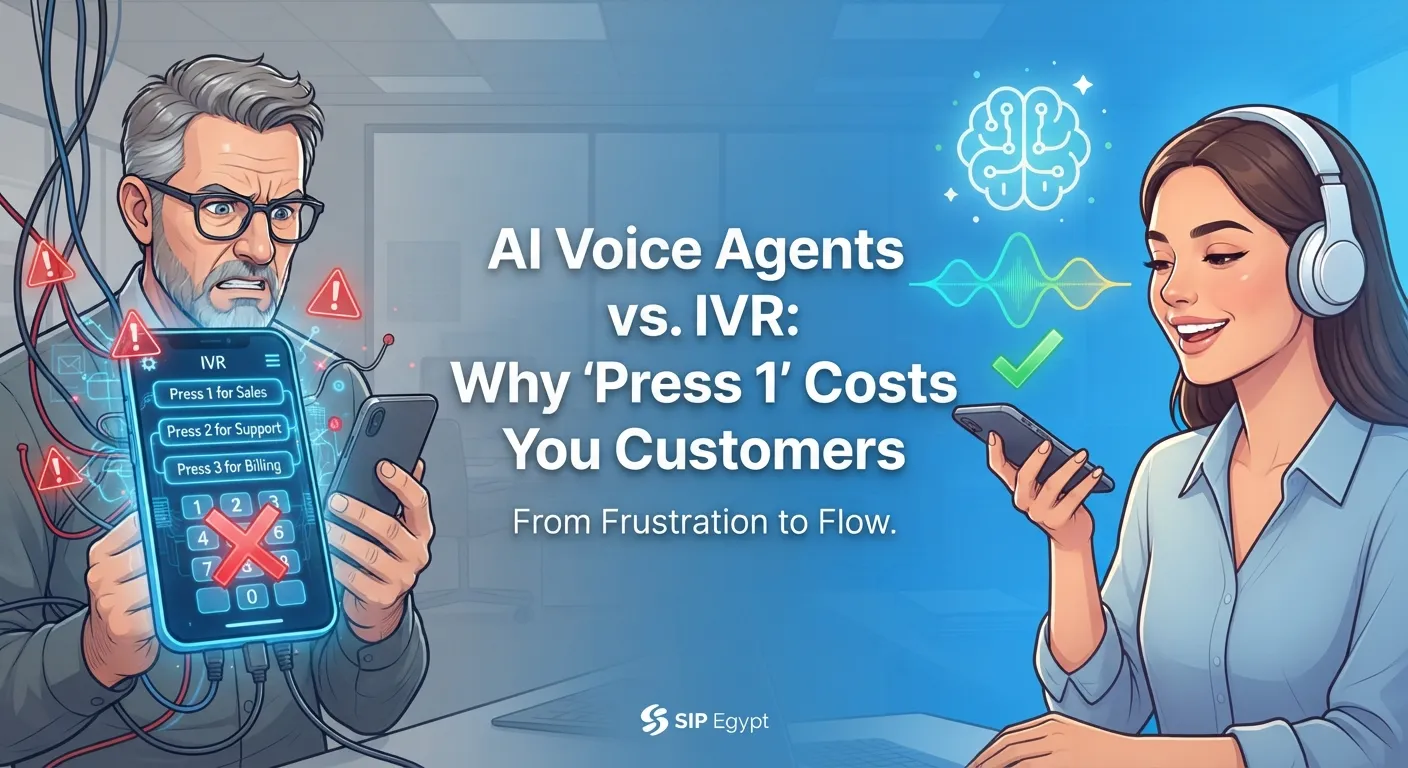
“For sales, press 1. For support, press 2. For billing, press 3.” Almost everyone has hung up on a menu like this at least once, either because none of the options quite matched what they needed, or because they just wanted to talk to someone and the menu was in the way. IVR systems were built to manage call volume, but they do it by making the caller do the work.
When examining customer experience metrics and telephony efficiency, understanding the operational contrasts of an AI voice agent vs IVR framework helps businesses eliminate unnecessary friction. AI voice agents solve the same underlying problem without that friction, replacing rigid phone trees with dynamic, natural conversations.
What IVR Actually Is
Interactive Voice Response (IVR) is the traditional phone menu system: a caller presses number keys or says a word from a limited list to get routed to a department or a pre-recorded answer. It works, in the sense that it does route calls, but it forces every caller into a fixed set of categories that may not match what they’re actually calling about.
Where IVR Breaks Down
Traditional button-driven menus encounter several recurring structural bottlenecks:
-
Callers with a request that doesn’t fit neatly into a menu option often just guess and get routed wrong.
-
Long menus with many options cause abandonment before the caller even reaches a person.
-
Nested sub-menus (“for X, press 1, then press 3”) multiply the frustration.
-
IVR can’t actually answer a question or complete a task – it can only route or play a static recording.
Evaluating an AI voice agent vs IVR comparison highlights how these legacy restrictions actively damage customer retention during peak support hours.
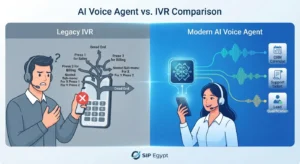
How an AI Voice Agent Handles the Same Call
Instead of asking the caller to sort themselves into a category, an AI voice agent asks what they need – in plain language – and figures out the right response or routing itself. A caller who says “I need to reschedule an appointment” gets handled directly, without pressing anything or navigating a menu tree first. If the request genuinely needs a human, the agent routes it to the right person with context already captured, rather than starting the caller over at a general queue.
Beyond Routing: Actually Resolving the Call
The deeper difference is that IVR can only direct traffic – it can’t answer a question or take an action. An AI voice agent can actually resolve a large share of calls itself: answering a question, booking an appointment, or checking a status, without ever needing to route to a person at all. That’s a fundamentally different job than what IVR was ever built to do.
Does This Mean IVR Is Obsolete?
For simple, high-volume routing where the options are genuinely limited and unambiguous – “press 1 to speak to store hours” – basic IVR still functions fine. But for anything where callers have varied, unpredictable needs, which describes most customer-facing call volume, an AI voice agent handles the same job with far less friction and actually resolves more of the call itself instead of just moving it along.
What Switching Actually Looks Like
Most businesses don’t need to rip out their entire phone system to make this change – an AI voice agent can sit in front of existing SIP trunking and handle the first interaction, with a much simpler fallback menu (or a human) only for the rare cases it can’t resolve. The caller experience shifts from navigating a menu to just saying what they need.
SIP Egypt’s AI voice agents replace the frustrating menu tree with a real conversation and resolve most calls without ever routing to a human. Request a demo and compare it to your current phone menu directly.